ในการทดสอบแบบ automation นั่น การทำความเข้าใจในเรื่อง SUT นี้ สำคัญมาก — มันเป็นเหมือน "แผนที่" ที่ทำให้ tester รู้ว่าต้องทดสอบอะไร ต้อง mock อะไร และต้องใช้เครื่องมืออะไร
เราไปลงลึกในแต่ละส่วนกัน...
วิธีทำความเข้าใจ SUT ใน 4 ขั้นตอน
ก่อนที่เราจะเขียน SUT Documents ต้องผ่าน 4 คำถามนี้ก่อนเสมอ
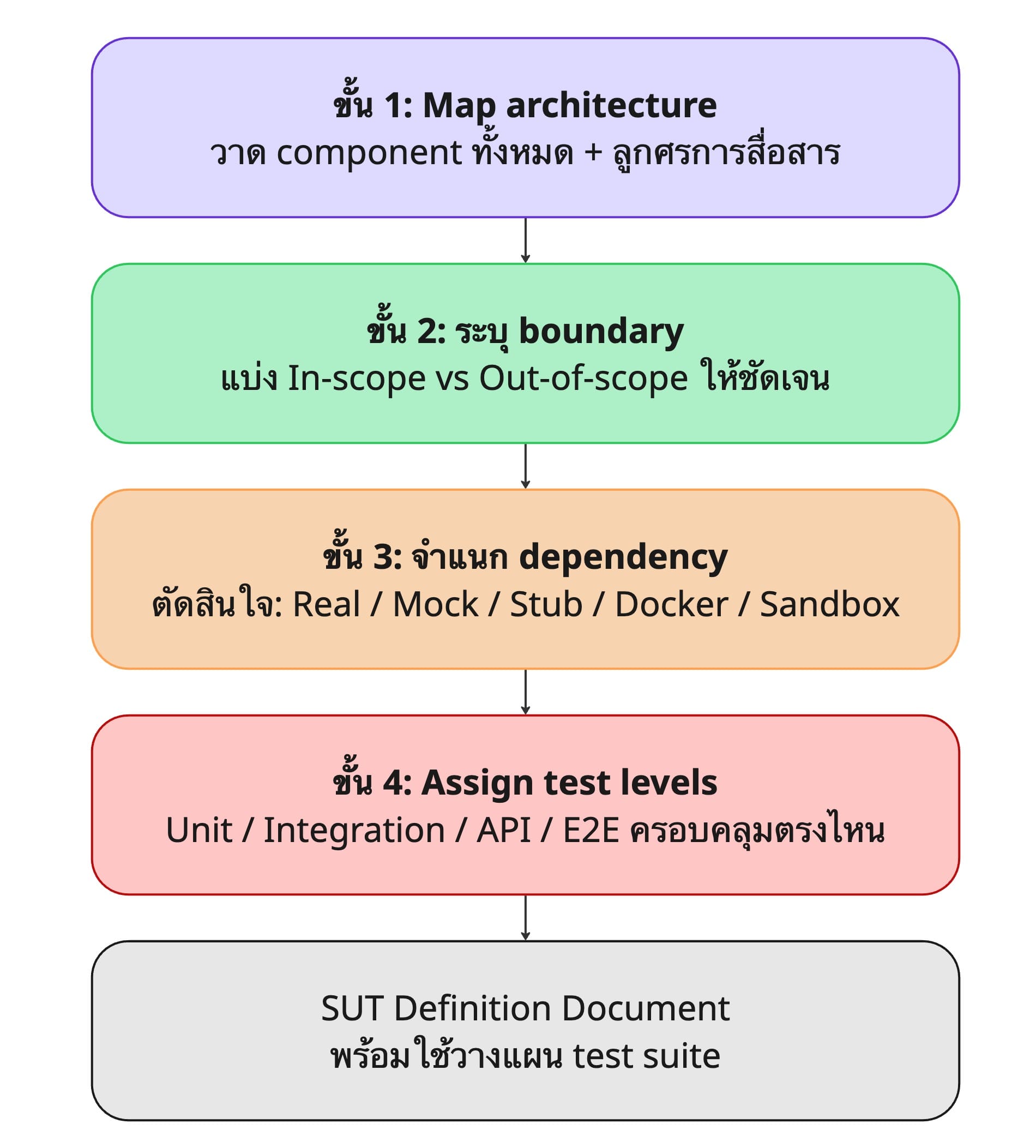
ขั้นที่ 1: วิธี Map Architecture ของระบบที่ต้องทดสอบ
ขั้นตอนนี้ คือ ขั้นที่สำคัญที่สุด ถ้า map ผิด ทุกอย่างที่ตามมาจะ scope ผิดหมด
กระบวนการ map ทำผ่าน 5 คำถาม ตามลำดับ:
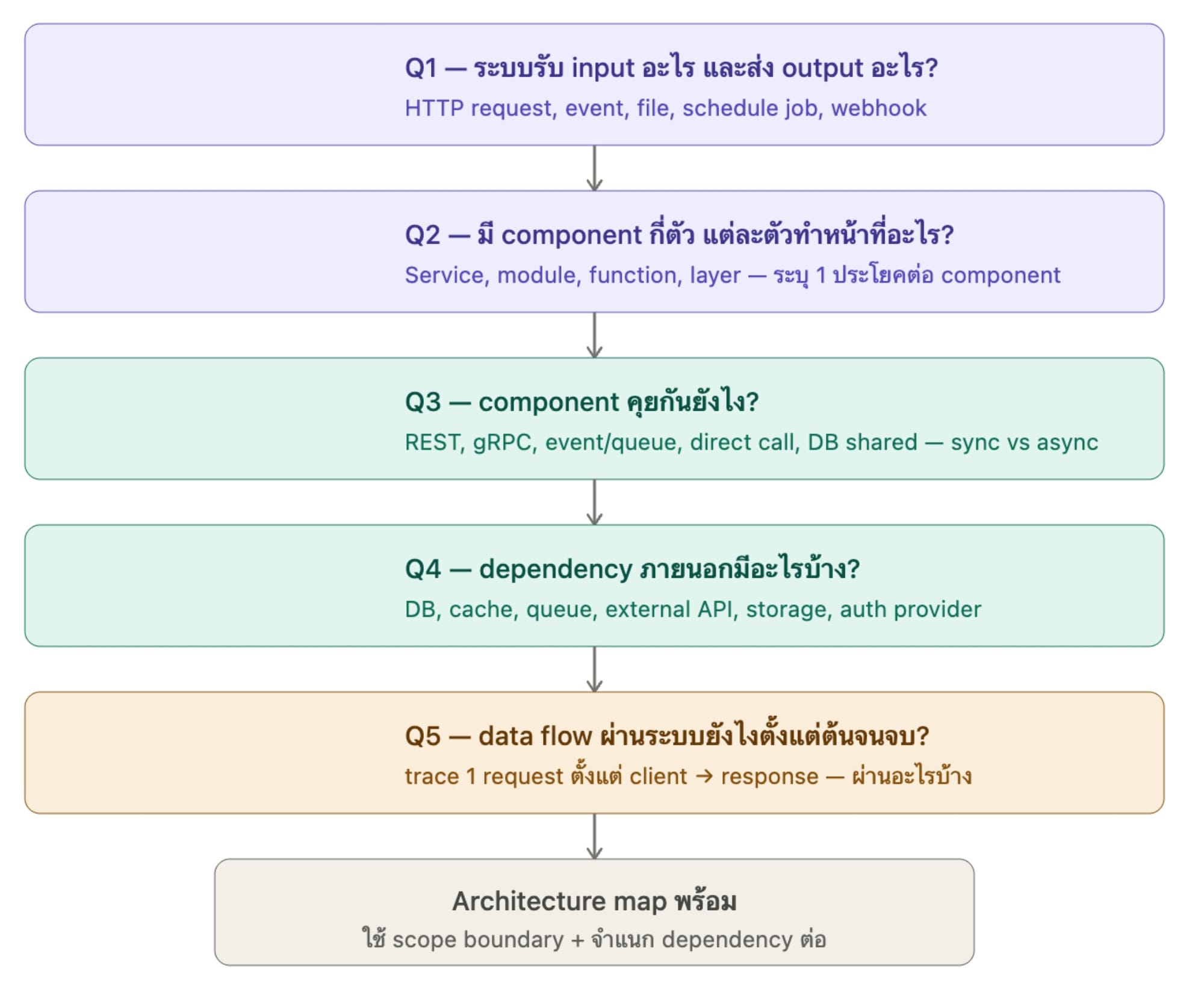
3 วิธีที่ใช้ map ตามสถานการณ์
1. มี dev/architect ช่วยได้: ทำ Event Storming หรือ Architecture Review session 1–2 ชั่วโมง วาด whiteboard ร่วมกัน แล้ว tester จด component + connection ลงใน template
2. ไม่มีคนช่วย อ่านเอง: อ่าน codebase จาก entry point เช่น router.ts, main.py, App.java แล้วตาม import/dependency ออกไปเรื่อยๆ พร้อมกับอ่าน docker-compose.yml และ .env เพื่อดู infrastructure ที่ระบบต้องการ
3. ระบบรันอยู่แล้ว: ใช้ network tracing เช่น Jaeger, Datadog, หรือแค่ browser DevTools Network tab trace request จริงแล้วดูว่ามันเรียก service อะไรบ้าง
Output ที่ควรได้ ของ Architecture Map
นี่คือ format ที่ tester ควรได้หลังจาก map เสร็จ ก่อนจะไปขั้น 2:
═══════════════════════════════════════════
ARCHITECTURE MAP — [ชื่อระบบ / Feature]
═══════════════════════════════════════════

ENTRY POINT (Q1)
  Input:   POST /api/orders  (HTTP REST, JSON body)
  Trigger: ทุกครั้งที่ user กด "สั่งซื้อ" จาก frontend
  Output:  201 Created + orderId, event → queue

COMPONENTS (Q2)
  Name              | Role (1 ประโยค)
  ──────────────────────────────────────────────────
  API Gateway       | รับ request, verify JWT, route ไป service
  Order Service     | validate + สร้าง order, publish event
  Inventory Service | ตรวจ stock, reserve item
  Notification Svc  | subscribe event, ส่ง email/push

COMMUNICATION (Q3)
  Gateway → Order Service    : REST (sync)
  Order → Inventory Service  : REST (sync)
  Order → RabbitMQ           : Publish event (async)
  RabbitMQ → Notification    : Subscribe event (async)

EXTERNAL DEPENDENCIES (Q4)
  PostgreSQL   : เก็บ order + inventory data
  RabbitMQ     : message broker
  Redis        : cache session + rate limit
  Stripe       : ชำระเงิน (external API)
  SendGrid     : ส่ง email (external API)
  JWT Provider : verify token (internal auth service)

DATA FLOW — Happy Path (Q5)
  Client
    → [POST /api/orders + JWT]
    → API Gateway (verify JWT)
    → Order Service (validate, create order in DB)
    → Inventory Service (check + reserve stock)
    → Stripe (charge payment)
    → DB commit (order = CONFIRMED)
    → Publish event: order.confirmed
    → RabbitMQ
    → Notification Service (subscribe)
    → SendGrid (send confirmation email)
    → Client ← 201 { orderId }
Architecture Map Output
ตัวอย่าง ก่อน และ หลัง map
ปัญหาที่เกิดขึ้นบ่อย คือ tester เริ่ม write test case โดยไม่มี map ผล คือ scope กว้างเกินไป หรือ พลาด dependency สำคัญ
ก่อน map: tester เขียน TC ว่า "ทดสอบ create order" แต่ไม่รู้ว่า Inventory Service ถูกเรียกด้วย → integration test ผ่านบน mock แต่ fail บน staging เพราะ stock logic ไม่ถูก test
หลัง map: tester เห็นว่า Order → Inventory เป็น sync REST call → ต้องรวมไว้ใน integration scope → ตัดสินใจ run Inventory Service จริงใน Docker Compose ไม่ใช่ mock
เมื่อ map เสร็จแล้ว ก็พร้อมไปขั้น 2: ขีด boundary ว่าอะไร in-scope อะไร out-of-scope และอะไรควร mock
ขั้นที่ 2: ระบุ boundary แบ่ง In-scope vs Out-of-scope ให้ชัดเจน
สำหรับการระบุ boundary เป็นทักษะที่สำคัญมาก ถ้า scope ผิด จะ over-test หรือ under-test ทั้งคู่มีปัญหา ขอแบ่งเป็น 3 ส่วน
1: แนวคิด boundary คือ อะไรและทำไมถึงสำคัญ
Boundary ของ SUT คือ เส้นที่ขีดรอบสิ่งที่ tester "เป็นเจ้าของ" ทุกอย่างข้างในต้องมี Test Case ครอบคลุม ทุกอย่างข้างนอกต้อง mock/stub หรือ ไม่สนใจ
ปัญหาที่เกิดจาก boundary ไม่ชัด:
- Scope กว้างเกิน → test ช้า, ยากดูแล, fail เพราะ external service ล่ม ไม่ใช่ bug จริง
- Scope แคบเกิน → พลาด bug ที่เกิดตรง integration point จริงๆ
- Boundary คลุมเครือ → dev กับ QA เข้าใจต่างกัน ทำให้ coverage ซ้ำบ้าง หายบ้าง
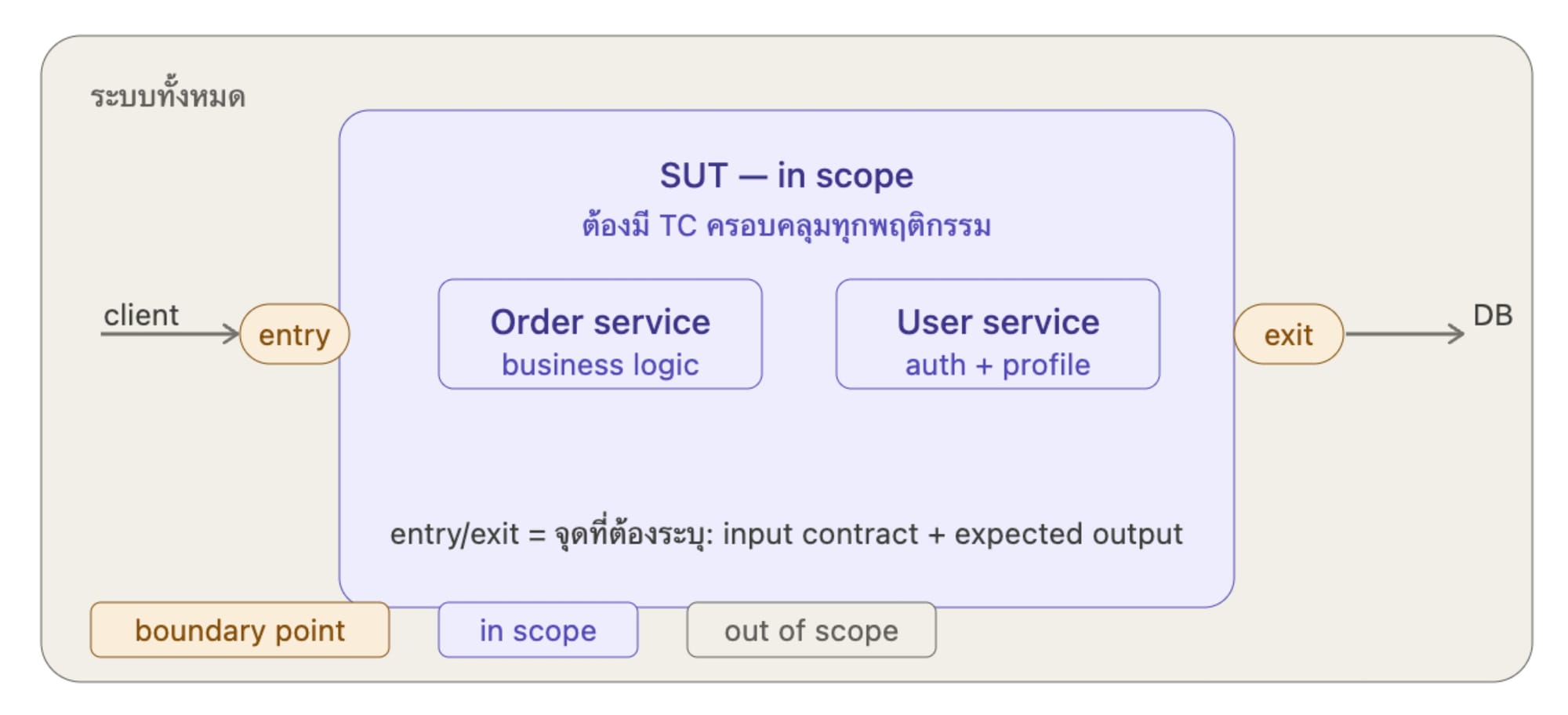
2: กระบวนการระบุ boundary
มี 4 คำถามตามลำดับ ทำในลำดับนี้เสมอ ไม่ข้าม เพราะแต่ละขั้นใช้ผลจากขั้นก่อน
คำถามที่ 1: "ใครเป็น owner ของแต่ละ component?"
ระบุทีมหรือคนที่รับผิดชอบแต่ละ component ซึ่งโดยทั่วไปแล้ว boundary ของ SUT มักตรงกับ ownership boundary อยู่แล้ว
เช่น
Component          | Owner           | ใน scope เรา?
────────────────────────────────────────────────────────────────
Order service      | Order team      | ใช่
User service       | Auth team       | ขึ้นอยู่กับ sprint
Payment gateway    | Vendor (Stripe) | ไม่ใช่
PostgreSQL         | Platform team   | ไม่ใช่ (แต่ใช้ Docker)
Notification svc   | Comms team      | ไม่ใช่
คำถามที่ 2: "Feature ที่ต้อง test ครั้งนี้มี scope แค่ไหน?"
Boundary ไม่ใช่สิ่งคงที่ตลอด แต่มันจะเปลี่ยนตาม sprint และ feature ที่กำลัง test
เช่น
Sprint A — "สร้าง order":
  In scope: Order service
  Out: User service (ใช้ mock JWT), Notification (ใช้ stub)

Sprint B — "order + notification integration":
  In scope: Order service + Notification service
  Out: User service (ยังคง mock), External email (ใช้ WireMock)
คำถามที่ 3: "Connection ไหนข้ามทีม/ข้ามระบบ?"
ทุก connection ที่ข้าม ownership boundary = boundary point ที่ต้องตัดสินใจว่า จะ mock หรือ run จริง
เช่น
Connection                      | ข้าม boundary?| ตัดสินใจ
─────────────────────────────────────────────────────────────────────────
Order → User service            | ใช่ (ข้ามทีม)   | Mock JWT, stub user data
Order → PostgreSQL              | ใช่ (infra)   | Docker container
Order → Stripe                  | ใช่ (vendor)  | WireMock / Stripe sandbox
Order → Notification service    | ใช่ (ข้ามทีม)   | Stub หรือ Docker compose
Order service → Order repository| ไม่ (ภายใน)   | รวมใน scope เลย
คำถามที่ 4: "Boundary point แต่ละจุดมี contract อะไร?"
เมื่อรู้แล้วว่าตรงไหนเป็น boundary ต้องระบุ input/output contract ที่จุดนั้น เพื่อใช้เป็นพื้นฐาน test และ mock spec
เช่น
Boundary point: Order service → User service
  Direction:  Order เรียก User
  Protocol:   REST GET /users/{id}
  Input:      userId (string, UUID format)
  Output:     { id, email, role, isActive }
  Error case: 404 ถ้า user ไม่มี, 401 ถ้า token หมดอายุ
  Mock spec:  stub ให้ return { id: "u1", role: "customer", isActive: true }
              และ stub 404 สำหรับ TC negative cases
3: SUT Boundary Map
tester ต้องระบุให้ชัดว่า ต้องการที่จะทดสอบในส่วนไหน ซึ่งมันจะตรงข้ามกับการทดสอบแบบ manual ที่ tester จะทดสอบ E2E ทั้งระบบ
แต่ในมุมของ automation เราจำเป็นต้อง scope services/functions ที่เราต้องการจะทดสอบ เพื่อลด dependency ที่จะทำให้การทดสอบแบบ automation ยากขึ้น
ตัวอย่าง
e-commerce ที่มี microservices - Tester ต้องเห็นภาพนี้ก่อนเสมอ:
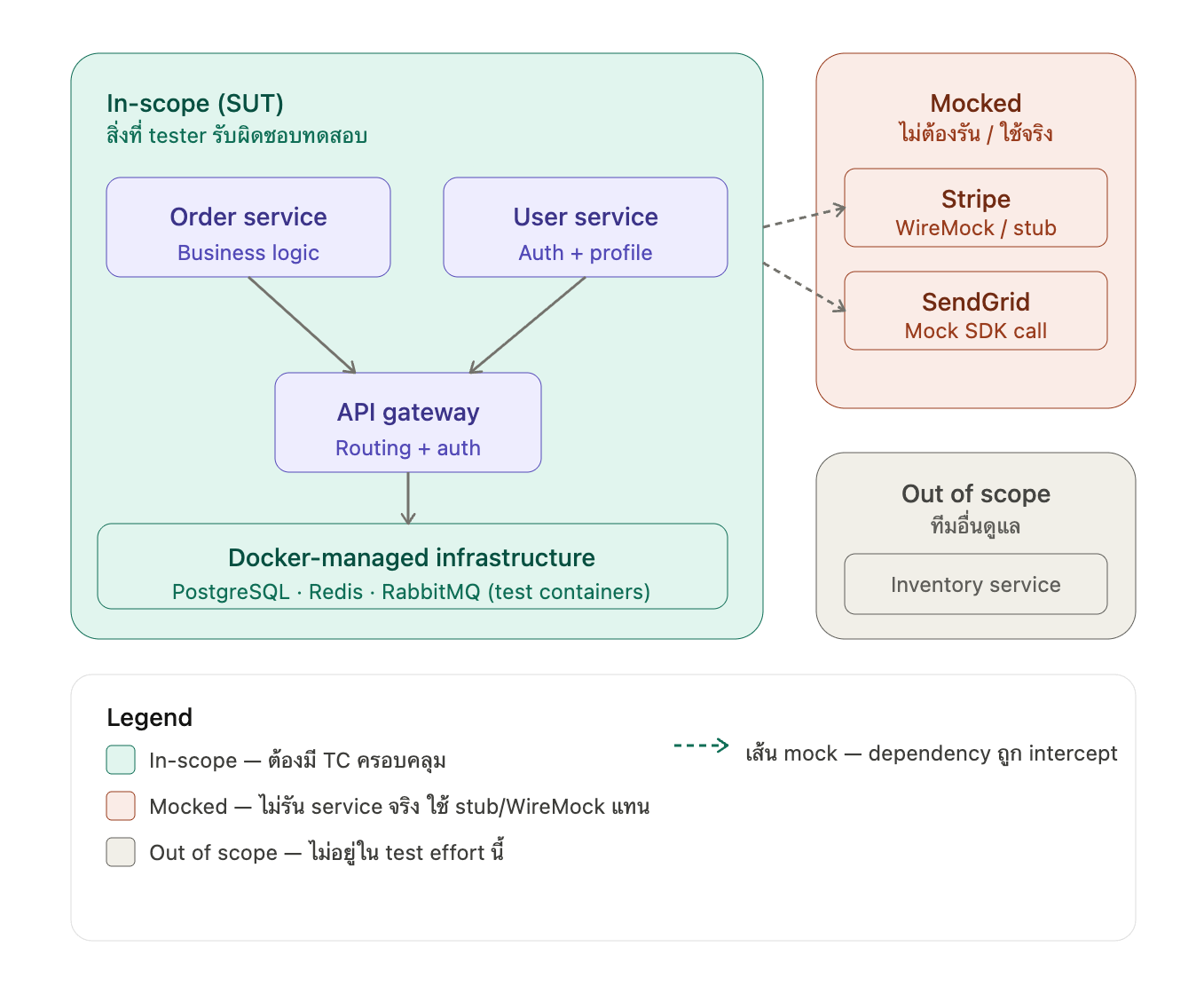
ส่วนนี้เป็นการ map boundary เข้าหากัน ซึ่ง tester จะต้องระบุให้ได้ว่า แต่ละ boundary นั่นจะใช้วิธีการแบบไหน
- in-scope
- mock / stub
- docker / sandbox
- out of scope
ในระบบที่เป็น Microservices นั้น เราจะเจอกับการเรียก services หลายตัว ดังนั้น tester จำเป็นต้องเห็นภาพรวมของระบบ และ scope ให้ได้ว่า ส่วนไหนที่เป็นเราที่จะทดสอบ และ ส่วนไหนที่ไม่ใช่ scope ของเรา เราจะไม่ทดสอบการทำงานของส่วนนั้น เราจะสนใจแค่ input/output เท่านั้น
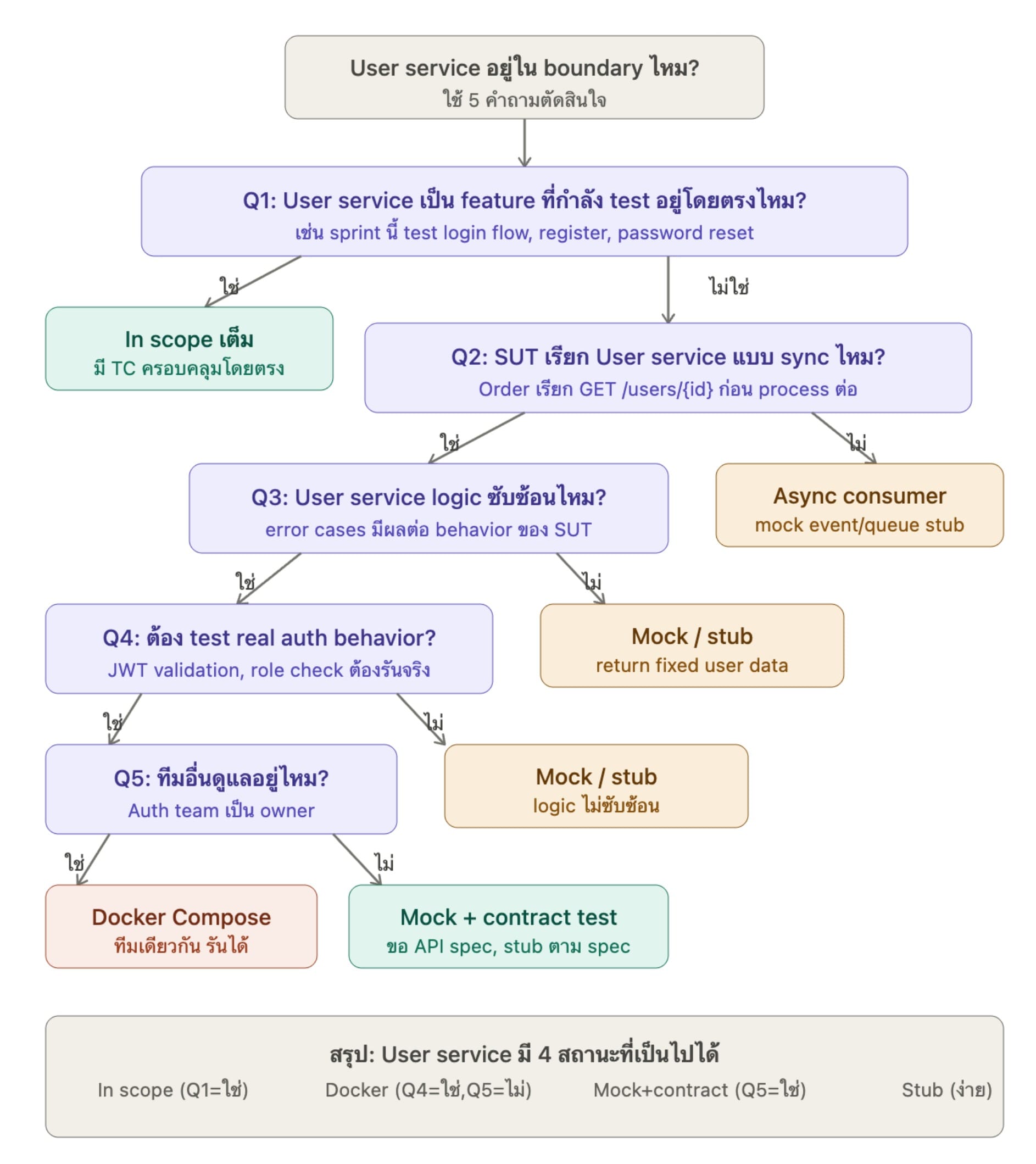
เราจะตัดสินใจยังไง ว่าอะไรอยู่ใน scope หรือ ไม่อยู่
มี decision framework ให้ใช้ ตอบคำถาม 5 คำถามนี้ ตามลำดับ คำตอบจะออกมาเองโดยไม่ต้องเดา
ขั้นที่ 3: จำแนก dependency ตัดสินใจ
นี่ คือ ทักษะที่สำคัญที่สุดในการออกแบบ test เพราะถ้าตัดสินใจผิดตรงนี้ test ทั้ง suite จะมีปัญหา
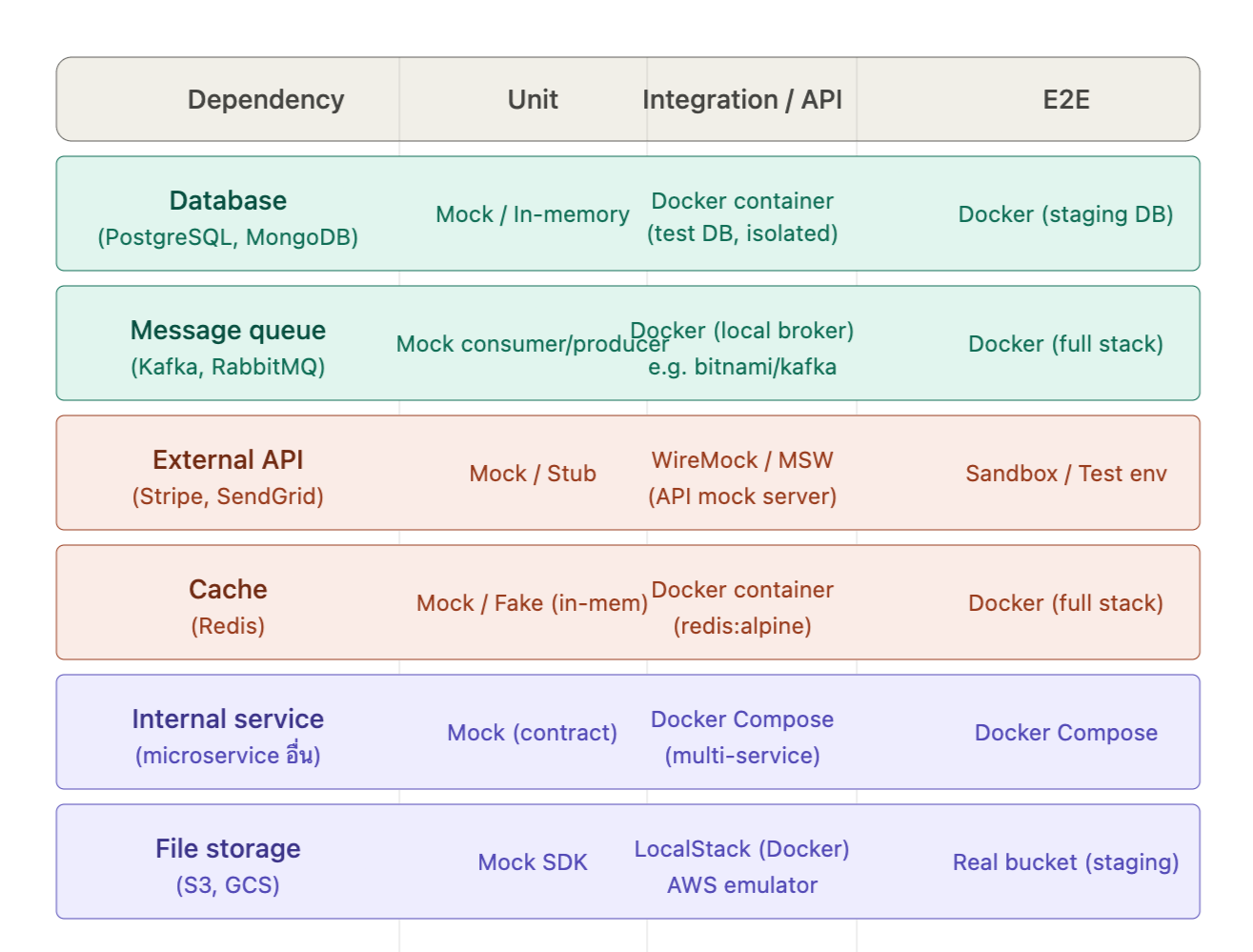
นี่คือส่วนที่ tester มักสับสนมากที่สุด เนื่องจากต้องถามตัวเองว่า "dependency นี้ ใน test level นี้ ควรเป็นอะไร?"
หลักการตัดสินใจ
- Unit → mock/stub เสมอ
- Integration → Docker สำหรับ infra, mock สำหรับ external
- E2E → real/sandbox เมื่อเป็น critical path
- ทีมอื่น → contract + mock
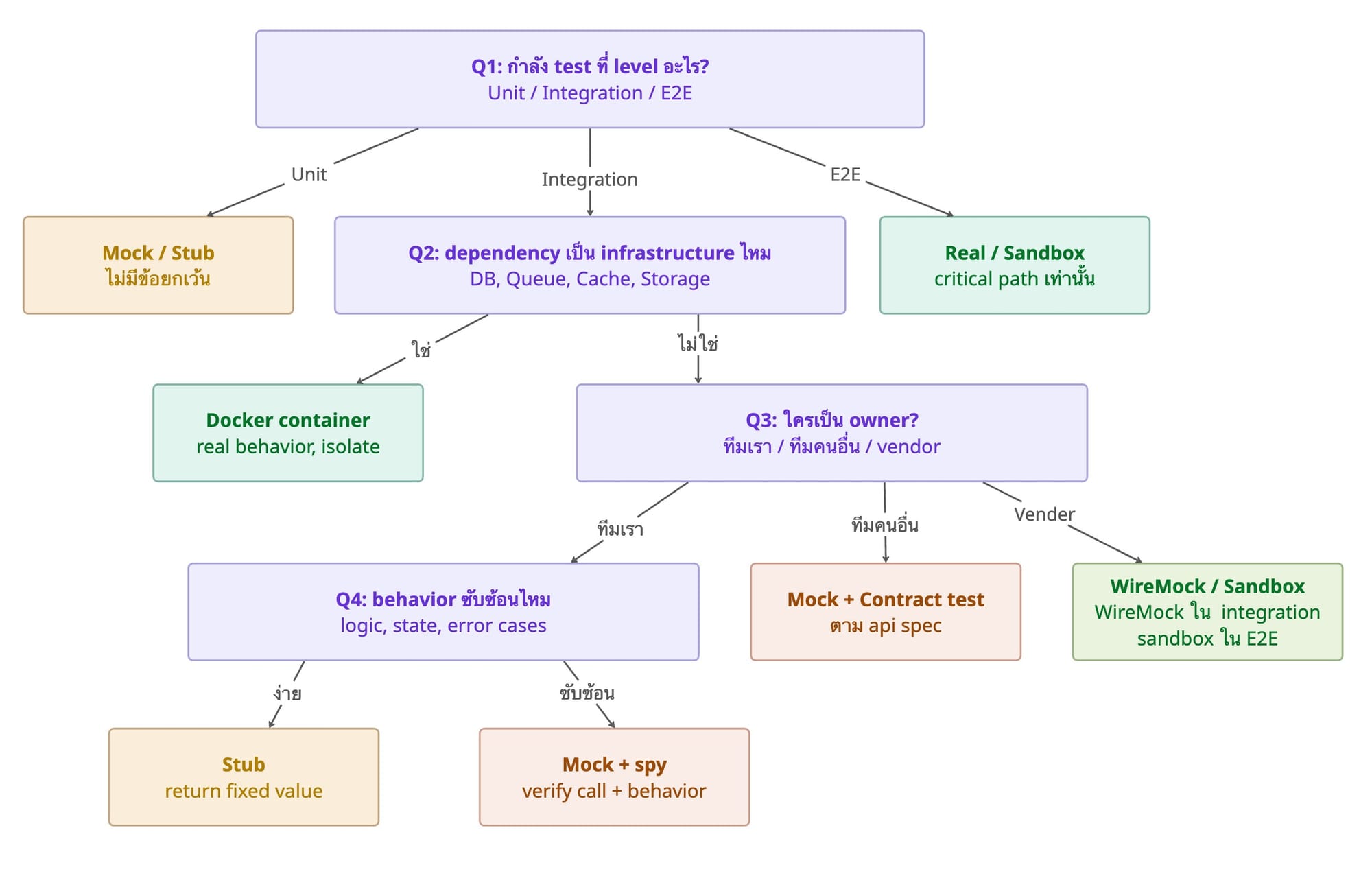
Decision Tree: ใช้ 4 คำถามตามลำดับ
stub vs mock ต่างกันยังไง - ต้องรู้ก่อนจะจำแนกได้
คนมักใช้สองคำนี้ปนกัน แต่มีจุดประสงค์ต่างกันชัดเจน
กฎง่ายๆ:
- ถ้า test สนใจแค่ "ได้รับข้อมูลกลับมา" → stub
- ถ้า test สนใจ "เรียก dependency ถูกต้องไหม" → mock
ตัดสินใจ mock vs docker vs sandbox
หากใครอยากได้ decision tree ที่ใช้ตัดสินใจ ซึ่ง tester สามารถเอาไว้ถามตัวเองเวลาเจอ dependency แต่ละตัวได้
เจอ dependency X → ถามคำถามนี้ตามลำดับ

1. X อยู่ใน in-scope หรือเปล่า?
   → ไม่ใช่ = out of scope, ไม่ต้องทำอะไร (ใช้ mock contract เพื่อ isolate)
   → ใช่ = ไปคำถาม 2

2. กำลัง test ที่ level ไหน?
   → Unit = mock/stub เสมอ (ไม่มีข้อยกเว้น)
   → Integration / API = ไปคำถาม 3
   → E2E = ไปคำถาม 4

3. X เป็น internal infrastructure (DB, Queue, Cache)?
   → ใช่ = Docker container (isolated, reproducible)
   → ไม่ใช่ (external API) = WireMock / MSW / mock server
              ยกเว้น partner มี sandbox = ใช้ sandbox

4. X เป็น critical external path (payment, auth)?
   → ใช่ = Sandbox ของ vendor (Stripe test mode, Google OAuth test)
   → ไม่ใช่ = Mock/stub ก็พอ ไม่ต้องรัน end-to-end จริง
decision tree
หลักการ 3 ข้อที่ทำให้ scope ชัด
1.mock ที่ boundary: ทุก dependency ที่อยู่นอก boundary ของ SUT ต้องถูก mock เสมอ ไม่ว่าจะเป็น unit หรือ integration test ไม่มีกรณียกเว้น
2.Docker สำหรับ infrastructure จริง: DB, Queue, Cache เป็น infrastructure ที่ควรรันจริงใน integration test ไม่ใช่ mock เพราะ behavior ของมัน (transaction, locking, event ordering) ต่างจาก mock มาก
3.Sandbox สำหรับ external partner ที่ critical: Stripe, PayPal, Google Auth มี test mode/sandbox ให้ใช้ใน E2E ควรใช้แทนการ mock เพราะครอบคลุม error cases ที่ real API จะส่งกลับมา
สัญญาณที่บอกว่าเรา classify ผิด
ถ้า test suite มีอาการเหล่านี้ แปลว่า dependency classification ผิดอยู่
- test ช้าผิดปกติใน unit test → มี dependency จริงหลุดเข้ามา ควรเป็น mock แต่ไม่ได้ mock
- test ผ่านทั้งหมดแต่ staging fail → mock ที่เขียนไม่ตรงกับ real dependency เกิดจากไม่มี contract test
- test flaky ไม่สม่ำเสมอ → async dependency ใน integration test ไม่ได้ใช้ Docker จริง หรือ timeout ไม่พอ
- test ไม่จับ bug ที่ production เจอ → under-mock เกินไปใน integration ควรใช้ Docker แต่ยังคง stub อยู่
ขั้น 4: Assign test levels (Unit / Integration / API / E2E ครอบคลุมตรงไหน)
ขั้นตอนสุดท้ายของ SUT analysis เมื่อเรา map, scope, classify dependency ครบแล้ว ก็ assign level ได้เลย
โดยเราต้องเข้าใจก่อนว่า เราไม่จำเป็นต้องทดสอบ 100% ทุก level เพราะการทำแบบนั้น อาจจะกินเวลานานเกินไป หรือ อาจจะไม่ได้สร้างประโยชน์มากขนาดนั้น
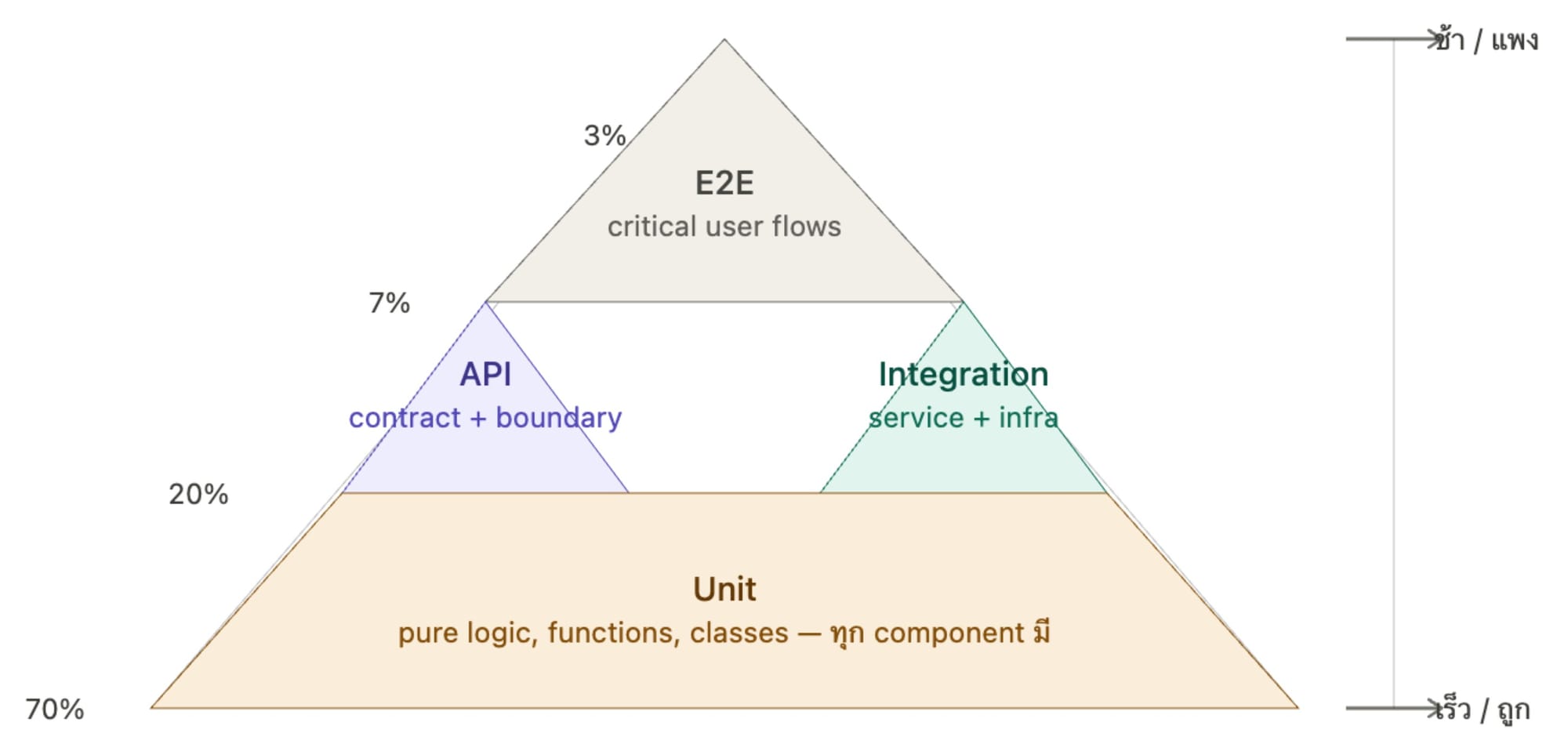
จากตัวอย่าง ตัวเลข 70/20/7/3 ไม่ใช่กฎตายตัว เป็นแนวทางที่ทำให้ suite เร็ว เชื่อถือได้ และดูแลง่าย ในระบบที่ heavy integration อาจเป็น 50/40/7/3 ก็ได้
เกณฑ์การ assign: ถามตัวเองแค่ 3 ข้อ
ก่อน assign level ให้ component ไหน ถามตามลำดับนี้:
1. "component นี้มี logic อะไรที่ทดสอบได้แบบ isolated?"
   → ถ้ามี = ต้องมี Unit test เสมอ (แทบทุก component)

2. "component นี้ interact กับ dependency จริงยังไง?"
   → ถ้า interact กับ DB/Queue/Cache = ต้องมี Integration test

3. "component นี้อยู่ใน user-facing flow ที่ critical ไหม?"
   → ถ้าใช่ = ต้องมี API test ที่ boundary + E2E test ที่ flow
ตัวอย่าง Level Assignment
TEST LEVEL ASSIGNMENT — Order service  Sprint 12
─────────────────────────────────────────────────────────────────
Component          │ Unit │ Integration │ API │ E2E │ หมายเหตุ
───────────────────┼──────┼─────────────┼─────┼─────┼──────────
Order domain       │  ✓   │      —      │  —  │  —  │ pure logic
OrderService       │  ✓   │      ✓      │  —  │  —  │ unit=logic, int=transaction
OrderRepository    │  △   │      ✓      │  —  │  —  │ △ = optional, int เป็นหลัก
OrderController    │  —   │      —      │  ✓  │  —  │ HTTP contract
DiscountCalculator │  ✓   │      —      │  —  │  —  │ pure function
EventPublisher     │  ✓   │      ✓      │  —  │  —  │ unit=spy, int=real queue
Checkout flow      │  —   │      —      │  —  │  ✓  │ critical user journey
Payment flow       │  —   │      —      │  —  │  ✓  │ critical, Stripe sandbox
─────────────────────────────────────────────────────────────────
รวม TC ประมาณ:       ~60        ~15       ~20   ~3
สัญญาณที่บอกว่า assign ผิด level
TC อยู่ผิด level มักแสดงออกแบบนี้
- unit test ช้าผิดปกติ (>50ms/test) → มี real I/O แอบอยู่ ควรย้าย dependency ออกหรือ mock แทน
- integration test fail เพราะ validation error → validation logic ควรอยู่ใน unit ไม่ใช่ integration
- E2E test ครอบคลุม edge case validation → เปลืองทรัพยากรมาก ควรย้ายลงมา unit หรือ API test
- ไม่มี unit test เลยสำหรับ service layer → จะ debug ยากมากเมื่อ integration test fail เพราะไม่รู้ว่า logic หรือ infra ผิด
- อยากให้ช่วยสร้าง Level Assignment Table สำหรับ service ที่ทีมกำลังทำอยู่ไหม บอก component และ layer มาได้เลย
SUT Definition Template
หากต้องการ template เอกสารที่ใช้ หน้าตาจะเป็นประมาณนี้
═══════════════════════════════════════════════════════
SUT: [ชื่อระบบ]   Version: [sprint/version]
═══════════════════════════════════════════════════════

ARCHITECTURE STYLE
  [ ] Monolith   [x] Microservices   [ ] Serverless

IN-SCOPE COMPONENTS
  Component          | Type            | Owner
  ──────────────────────────────────────────────
  Order Service      | Backend         | Order Team
  User Service       | Backend         | Auth Team
  API Gateway        | Infra/Backend   | Platform Team

DEPENDENCY STRATEGY
  Dependency   | Unit        | Integration    | E2E
  ─────────────────────────────────────────────────
  PostgreSQL   | Mock ORM    | Docker         | Docker (staging)
  Redis        | Mock        | Docker         | Docker (staging)
  RabbitMQ     | Mock        | Docker         | Docker (staging)
  Stripe       | Stub        | WireMock       | Stripe sandbox
  SendGrid     | Mock SDK    | Mock SDK       | Mock SDK
  S3           | Mock SDK    | LocalStack     | Real bucket (staging)

OUT OF SCOPE
  - Inventory Service (ทีมอื่นดูแล)
  - Analytics Pipeline (ไม่เกี่ยวกับ flow ที่ test)

DOCKER COMPOSE SETUP
  test-db:      postgres:15-alpine
  test-cache:   redis:7-alpine
  test-queue:   bitnami/rabbitmq
  wiremock:     wiremock/wiremock:latest
SUT Definition Template